As support for Shas fractures in its Mizrahi heartland, far-right Ben Gvir reaps rewards
In southern Netivot, residents laud Otzma Yehudit leader for controversial clampdown on Palestinian prisoners’ conditions and gun license expansion, blame ‘leftists’ for October 7
NETIVOT — It was quiet in this southern Israeli town’s commercial district the week after the election.
The Judaica stores were empty on an uncharacteristically warm November day; the streets were mostly filled with young men in white shirts and black skullcaps, heading to and from their Torah studies or manning stalls selling cheap clothing, household items, hummus, falafel, and schnitzel.
Largely religious and ranked in the third-lowest socioeconomic decile by the Central Bureau of Statistics, Netivot retains a palpable sense of economic hardship despite the new housing developments on its outskirts. It is home to many families of North African descent and is best known for the tomb of the Baba Sali, Rabbi Yisrael Abuhatzeira, a revered kabbalist who settled in the city in 1951 after immigrating from Morocco.
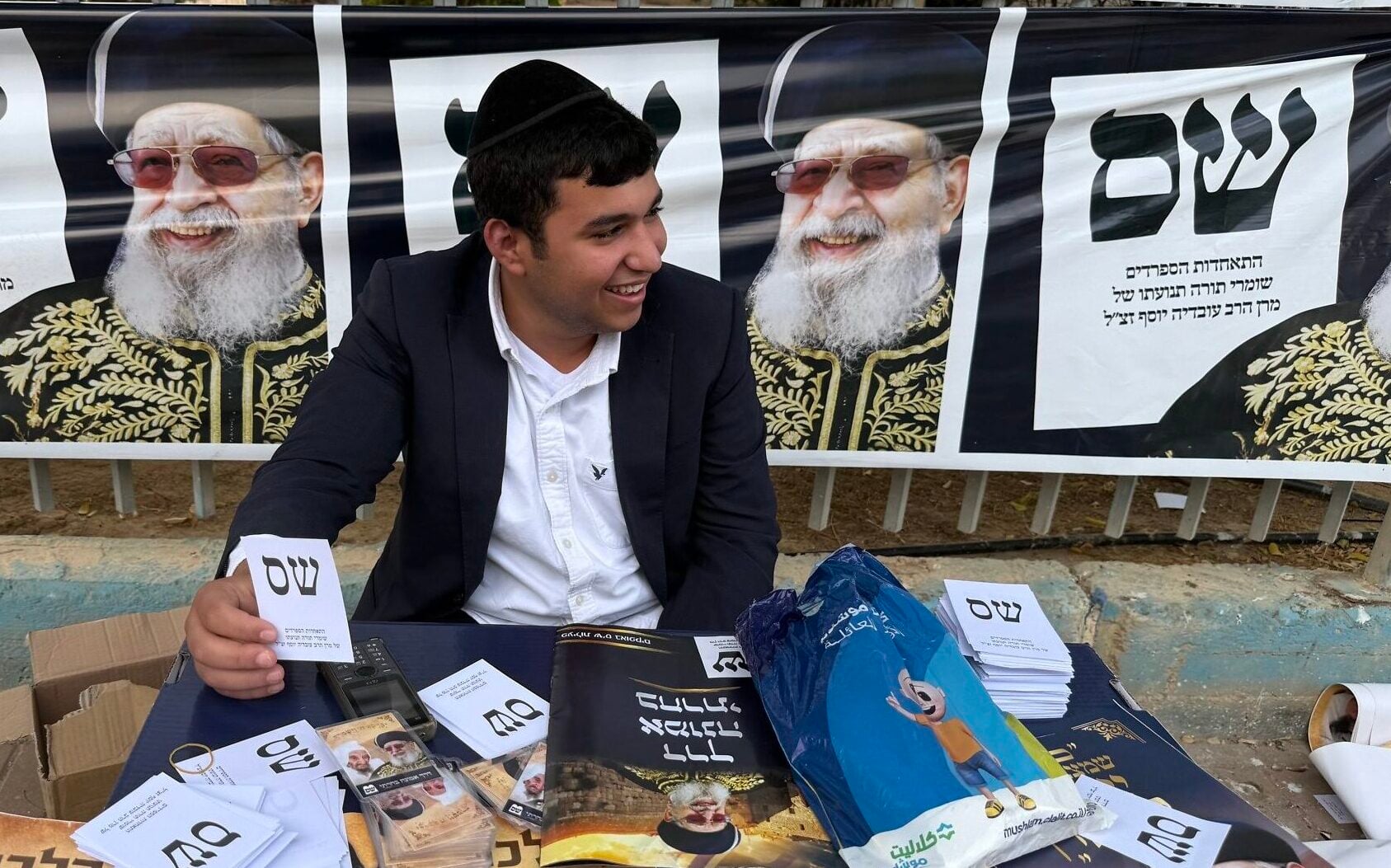
The town of some 55,000 has been, and should still be, a shoo-in for Shas, the political party founded 40 years ago by the late Rabbi Ovadia Yosef, Israel’s venerated Sephardic chief rabbi in the 1970s and ’80s. The party’s raison d’etre is to provide religious schooling and social welfare for Mizrahim, or Israelis of Middle Eastern origin, who have historically felt excluded by Israel’s Eastern European Ashkenazi leaders.
But last Monday, those Netivot residents willing to talk to The Times of Israel spoke only of Itamar Ben Gvir, the controversial national security minister and leader of the far-right Otzma Yehudit party.
As overseer of the Israel Prison Service, Ben Gvir had clamped down on the “luxuries” that Palestinian prisoners once enjoyed, supporters said, and they praised him for making it easier for civilians to possess and carry weapons.
That support for Ben Gvir came at Shas’s expense. The party nosedived from 42.5% of the city’s vote in the last election to 28.9% in this one even as turnout jumped from 75.6% to 80%. Nationally, Shas took six seats, down from 11.
But Otzma Yehudit doesn’t take the sole credit for Shas’s drop in votes. The powerful Abergel rabbinic dynasty had broken with Shas to create a rival party, Achi, which rejected Shas’s insistence that Torah scholars be exempt from military service. Adherents of the Abergel faction also moved their schools into the state system, where math and English are taught alongside religion — a move at odds with Shas’s insular philosophy.
When Achi withdrew from the election at the behest of Prime Minister Benjamin Netanyahu’s Likud party — which warned that votes would be wasted should Achi not reach the minimum threshold to enter the Knesset — the dynasty’s spiritual leader, Haim Yosef Abergel, told followers to vote not for Shas, but for Otzma Yehudit.
Many heeded his call.
“There are people who call Ben Gvir fascist, but he looks after the people,” said Itzik, drinking coffee at a branch of the Aroma cafe chain. He declined to give his surname or say how he voted, but stressed he was right wing.
But Netivot also reflected Shas’s losses countrywide. Experts say the reasons stem from political rifts, an uncompromising anti-draft position that angered Mizrahim who serve in the military, and alleged alienation between the Jerusalem-based leadership and grassroots followers in the geographic and social periphery.
Losses, town after town
Shas reached its zenith in 1999 with 17 seats, elected by two parallel communities, the ultra-Orthodox Haredim, who mostly do not serve in the military, and traditional Mizrahi Jews, who largely combine religious observance with secular life and army service.
An analysis by Prof. Momi Dahan, a Hebrew University economist who breaks down voting by locality, shows that in places where Haredi parties scooped at least half of the vote in 2022, Shas fell from 25% that year to 18% in 2026. United Torah Judaism, the Ashkenazi ultra-Orthodox party, lost just 1%, and Likud gained 1%.
The decline of Shas was deeply felt in the poorer social periphery: former so-called development towns and moshavim (cooperative villages) built mid-last century for new immigrants, initially from Arab and Muslim lands, according to Dahan’s figures.
In the center and south of Israel, Shas fell from 23% to 15% in Ofakim; from 20% to 11% in Kiryat Malachi; from 17% to 6% in Moshav Amioz, which was invaded by Hamas terrorists on October 7, 2023; and from 9% to 6% in Moshav Mivtahim.
Along the Lebanese border in the north, pummeled by Hezbollah missiles for years, Shas collapsed from 31% to 11% in Moshav Avivim and from 11% to 7% in Moshav Margaliot; in Kiryat Shmona, support fell from 11% to 6%, and in Tiberias, from 20% to 15%. (All percentages have been rounded to the nearest whole number.)
Searching for a new identity
A senior Shas insider, not authorized to speak publicly, said the party had alienated religious and secular followers alike.
“Rabbi Ovadia died 13 years ago, and his power is declining,” the official said, a former chief rabbi and still the guiding light of the Shas party. “Shas is looking for its identity.”
He noted that lawmakers popular in peripheral towns, such as Moshe Arbel and Yaakov Margi, resigned in May in what many saw as a purge by party leader Aryeh Deri.
This week, it was announced that Deri will step down from the Knesset. He will remain party chairman, but will no longer represent the Knesset faction and cannot serve as a government minister because of his past criminal offenses.
Dahan concurred that the party is viewed as increasingly out of touch.
“After October 7, the [Haredi] slogan of ‘Die rather than enlist’ hurt in areas where people serve in the army and are not Haredim,” he said. Conversely, he added, Mizrahi Haredim were dissatisfied with Shas’s inability to secure exemption from the draft.
The official described how Ovadia Yosef’s son, Rabbi Yitzhak Yosef, battled Deri for influence, threatening that Haredim would leave Israel if draft dodgers were arrested and telling followers to flush draft notices down the toilet.
“Mizrahi Haredim who don’t serve in the IDF saw a muddled campaign,” the official said. “Without a consensus of rabbis on who to vote for, some stayed at home, while others voted for the [Ashkenazi] UTJ. The more traditional (and less Haredi) supporters voted Likud or Otzma Yehudit.”
A high-profile example, he said, is the accusation that Deri failed to support Rabbi Elhanan Danino.
Danino’s son, Ori, a 25-year-old off-duty soldier, was abducted from the Nova music festival while rescuing others during the October 7 onslaught and was later murdered in Hamas captivity.
In March 2025, Danino told The Times of Israel he had left Shas 15 years earlier, unable in good conscience to set an example for his children while in a party facing rifts and the criminal convictions of its leadership.
Danino is now an outspoken advocate for a state commission of inquiry into the circumstances leading up to October 7, which Netanyahu opposes.
Tailor-made for Shas
Shira, who works in a women’s clothes shop, is the kind of Mizrahi voter Shas was built for. Last month, she followed Abergel to Otzma Yehudit. She refused to give her surname or be photographed for fear of Shas retribution.
Born in Bnei Brak, a largely Orthodox city near Tel Aviv, to a strictly religious Moroccan-rooted family, she grew up among Ashkenazi Haredim but, like her siblings, was refused a place at an Ashkenazi Orthodox school. This is the kind of rejection that has long driven Mizrahi voters into Shas’s arms.
Later, penniless, with two young children and a yeshiva-student husband, she moved to Netivot, where the Abergels began to support her family financially. Shas, she charged, had persecuted Rabbi Yoram Abergel (Haim Yosef Abergel’s father) and contributed to his death from cancer in 2015 at the age of 58.
Shira had only praise for Netanyahu. She blamed the political and security establishment for the failure to protect Israeli citizens on October 7, particularly Ronen Bar, former chief of the Shin Bet security agency. Bar has since filed a defamation suit against Netanyahu over statements the premier made last month alleging that Bar knew about the threat on the night before the Hamas attack but chose not to inform him.
In Netivot, Likud remained stable, securing 27% of the vote, just half a percent less than in 2022.
With glowing eyes, Shira insisted, “Netanyahu is amazing.”